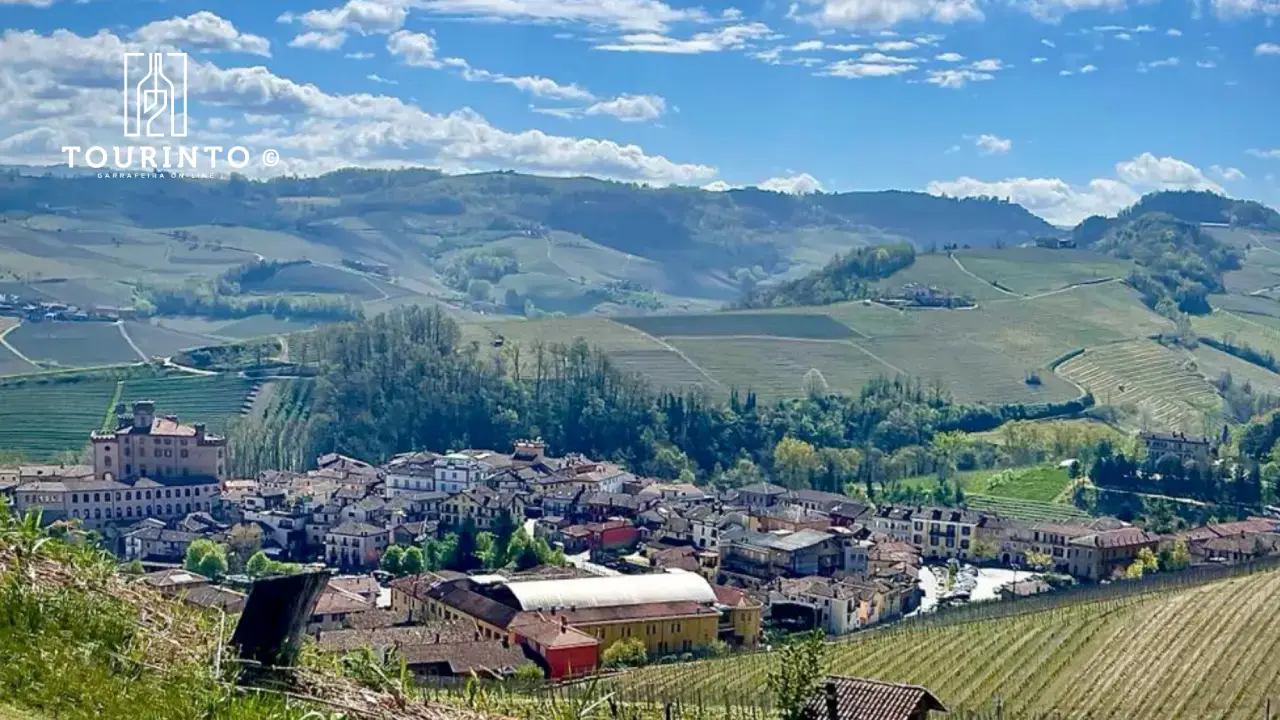
Surely you have heard of Italy’s most famous wine, Barolo, which is also the name of a commune within its Designation of Origin. We’re going to tell you everything you need to know so you can get a quick and straightforward introduction to the region’s wines.
Piedmont is a region in the north-east of Italy whose capital is Turin, bounded by the Alps to the north and east, where it borders France and Switzerland, and by the Ligurian Sea to the south.
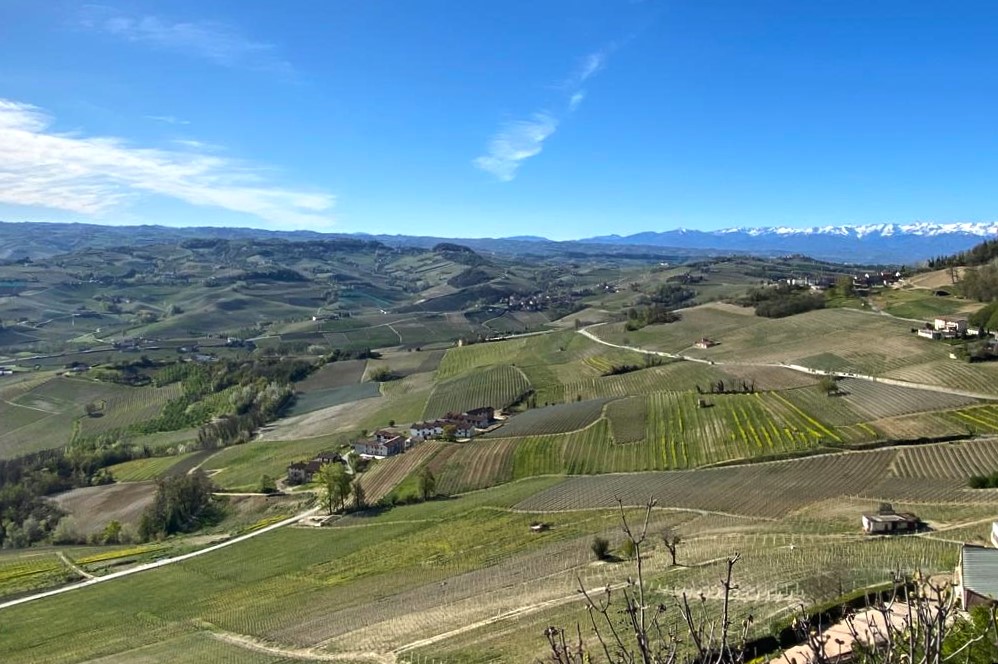
North view from La Morra. © Tourinto Premium Wines All rights reserved.
Famous for its truffles but also for its wines, it is in the mountainous region of Langhe that we find the most important cities, Asti and Alba. The first famous for its sparkling wine, the second around which lie the most important Denominations of Origin (DO), Barolo DOCG and Barbaresco DOCG, where wines of the same name are produced from the Nebbiolo grape variety.
Although Nebbiolo is the most acclaimed grape variety, Dolcetto and Barbera are actually the most traditional red grape varieties in the region, and their wines are commonly found at Piedmontese tables.
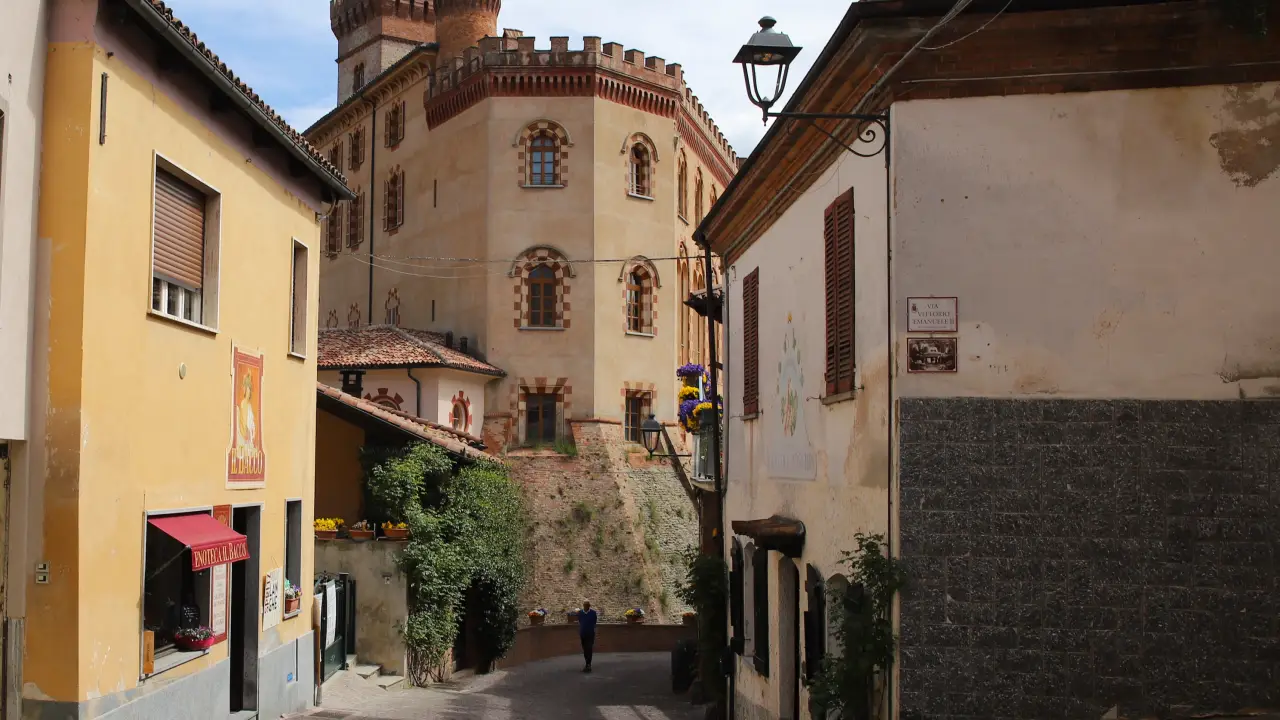
Castelo de Barolo. © Tourinto Premium Wines All rights reserved.
What is the difference between a Barolo and a Barbaresco?
Both are DOC wines, with defined geographical boundaries and specific production and ageing regulations, made exclusively from the Nebbiolo grape variety
Barolo
In this DO we find 5 of the 11 communes (Cherasco, Diano d’Alba, Grinzane Cavour, Novello, Roddi and Verduno) most important for the production of Barolo wines – La Morra, Monforte d’Alba, Serralunga d’Alba, Castiglione Falletto and the municipality of Barolo – and it may only be released onto the market in January of the 4th year following the harvest, having undergone a minimum ageing period of 38 months, of which 18 must be in wood.
Barbaresco
Nesta DO encontramos as 4 comunas onde pode ser produzido um vinho Barbaresco – Neive, Trieso, Alba (San Rocco Seno d’Elvio) e a comuna de Barbaresco – o qual apenas pode ser lançado para o mercado em Janeiro do 3º ano após a vindima, obedecendo a um estágio mínimo de 26 meses dos quais 9 em madeira, sendo menos perfumado que o Barolo mas mais frutado.
So, when you see Barolo or Barbaresco on a label, you will know that it is a wine made from 100% Nebbiolo grapes, produced in one of the communes within its DO, with defined production rules, a mandatory minimum ageing period, and great ageing potential. It can be produced in different styles, in large Slavonian oak barrels –Botti (traditional ageing) – or in French oak barrels, reflecting a modern ‘New World’ style.
© Tourinto Premium Wines All rights reserved.
What are the characteristics of the Nebbiolo grape variety?
It is a late ripening caste, with high levels of acidity and tannins, of little colour, 0riginating wines that may have notes:
Primary: Floral notes like roses and dried flowers, fruity notes like sour cherry, plum, currant or strawberry, herbaceous notes like dried grass, lavender and fennel, and spicy notes like white and black pepper or liquorice.
Secondary: Aging in wood can impart notes of tobacco, cigarette and smoke.
Tertiary aromas: Ageing in the bottle will produce tertiary notes of leather, truffle, tar, meat and mushrooms.
What does the term Riserva mean in a Barolo or Barbaresco?
In exceptional years, producers may opt to produce a Barolo or a Barbaresco Riserva, which is aged for a longer period (5 years) and generally has a higher alcohol content, constituting a wine of excellence in an also excellent year.
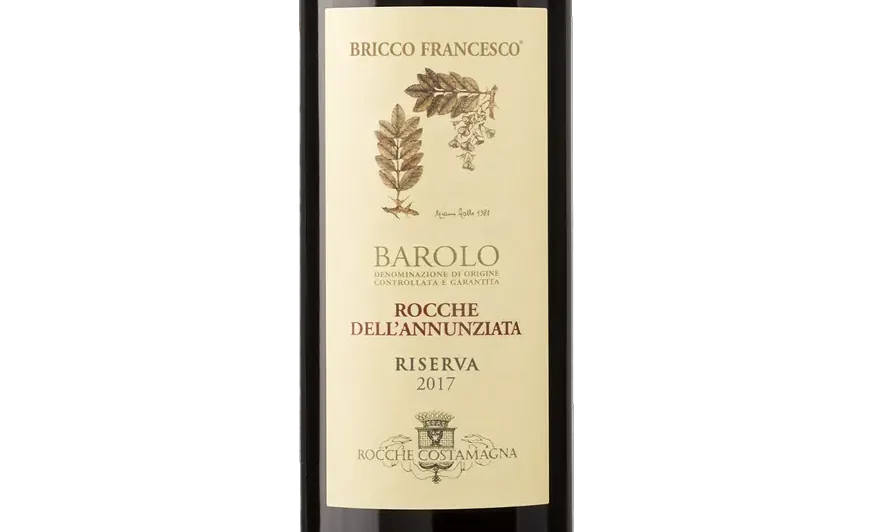
What other names can appear on wine labels?
Where wines are made from grapes from a single vineyard, the name of the vineyard will appear on the label, as well as when the grapes come from the same commune, the name of that commune may appear on the label.
The example is Barolo Monforte d’Alba (Municipality) Villero | Bussia (Vineyard | MGA)

What about the wines that are produced from Nebbiolo, which are neither Barolo nor Barbaresco?
You will find many wines from the Nebbiolo grape variety labelled Langhe DOC Nebbiolo.
These wines are generally produced from vineyards located within the DO of Langhe but outside the DO of Barolo DOCG or Barbaresco DOCG. However, they may be produced using grapes from the DO of Barolo or Barbaresco that are not used for the production of a Barolo DOCG or a Barbaresco DOCG,in cases where the vintage was not of sufficient quality to produce a Barolo or a Barbaresco, with the producer opting to downgrade to Langhe DOC, or in cases where yields per hectare exceeded the permitted production limit.
Put simply, we have the Barolo and Barbaresco Riserva as wines of exceptional quality, followed by the non-Riserva wines from a single vineyard, the Barolos which are produced from grapes sourced from different vineyards, and finally the Langhe Nebbiolo, where quality can range from reasonable to very good.
However, there are some fantastic exceptions, where outstanding Barolos are produced using grapes from various vineyards.
Dolcetto
Dolcetto is Piedmont’s most popular red grape variety and is generally regarded as the region’s ‘everyday’ wine. However, higher-quality Dolcetto wines are available, usually labelled Superiore, with the most famous appellation being Dogliani DOCG.
It produces wines with medium acidity and medium to high tannins, with fruity aromas of black plum, red cherry, dried herbs and, at times, pepper; these wines are generally produced to be enjoyed young, although some may be selected for ageing.
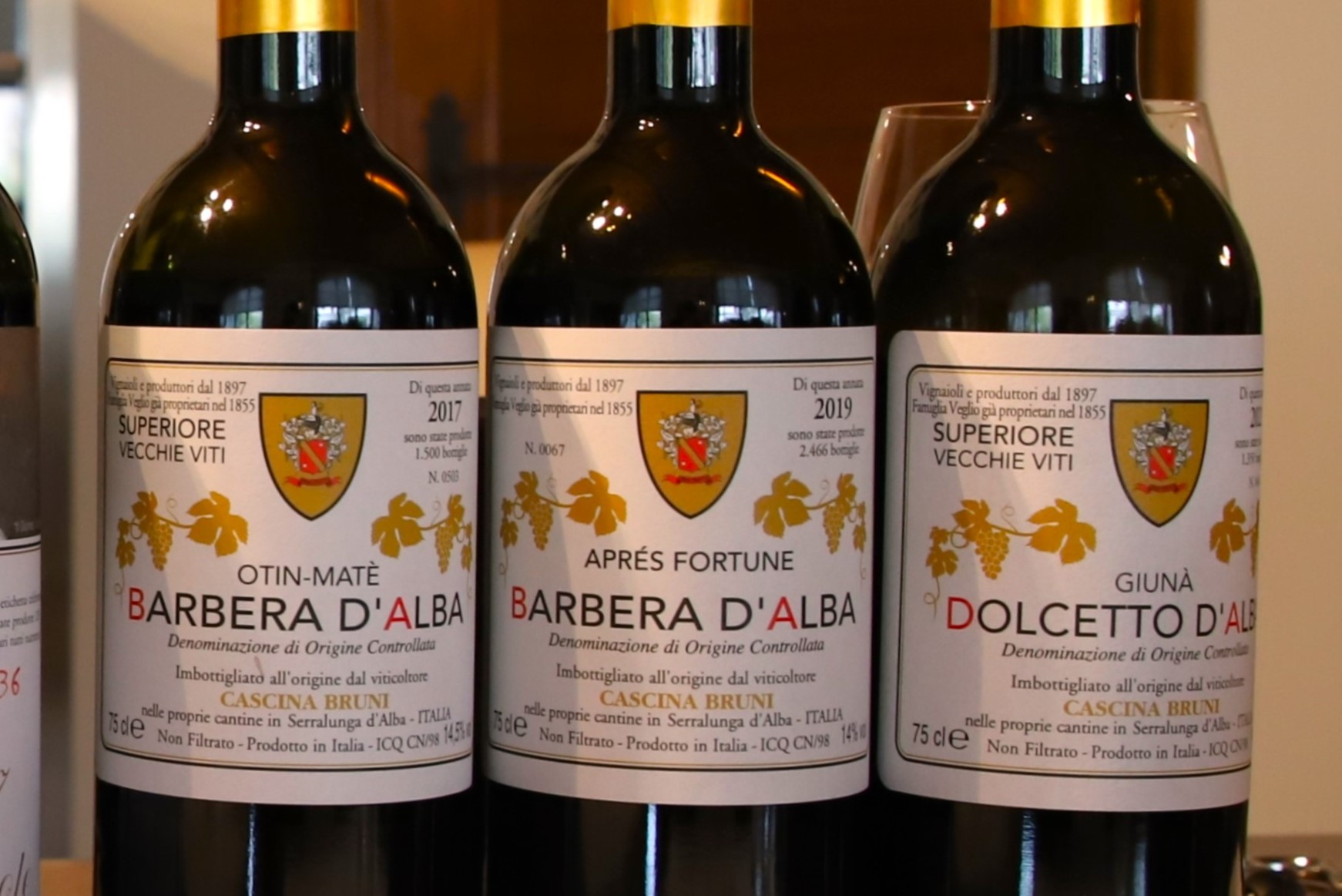
Dolcetto e Barbera.
Barbera
Barbera is also a very popular red grape variety and widely planted in the Piedmont region.Barbera d´Asti DOCG is considered to be of higher quality than Barbera d´Alba DOC, since around Alba are the DOs ofBarolo and Barbaresco, and the best slopes are reserved for the planting of Nebbiolo. However, there are exceptions where we can find Barbera d´Alba wines of great quality.
It produces wines with high acidity, medium to low tannins, a deep colour, and aromas of plum and red cherry, and sometimes black pepper; they can be enjoyed young, but most benefit from bottle ageing.
The Great Authors of Piedmont at Tourinto
To give you a real sense of the grandeur and untamed character we’ve been talking about, we’ve brought together some of the region’s most exclusive wines in our cellar:
Rocche Costamagna Dolcetto d´Alba: The perfect introduction to Piedmont.
Ratti Langhe Nebbiolo Reggimento: The elegance of Nebbiolo.
Rocche Costamagna Barbera d’Alba Superiore: The structure and freshness of Barbera.
What white grape varieties can we find in the region?
We can find indigenous white grape varieties such as Arneis, Cortese, Timorasso, Favorita or Moscato, as well as international varieties such as Sauvignon Blanc or Chardonnay.
Arneis – Produces wines with medium acidity, aromas that can range from herbaceous, green apple, tangerine and white flowers to pear and stone fruit, an excellent choice as a social wine or to accompany fish dishes and salads.
Cortese – It produces wines with high acidity, with aromas of citrus fruits, green apple, pear and white flowers, and may develop tertiary notes of almonds with ageing.
Timorraso – A grape variety that was almost extinct in the 1980s, it produces aromatic wines with notes of stone fruit, high acidity and good structure, as well as great potential for ageing in the bottle.
Favourite – Fresh and citrusy, it stands out for its intense notes of lemon, lime, grapefruit and green apple, accompanied by a subtle hint of wild flowers and a distinct herbaceous note. Light to medium-bodied with a lively, refreshing acidity, as well as a salty/mineral touch and a characteristic slight bitterness.
Moscato (Muscat) – Widely used in the production of Asti sparkling wines, it offers notes of fresh grapes, apricot and lychee, as well as hints of orange blossom and a touch of herbaceousness.
Discover our offer of Italian Wines.
Nota: Artigo revisto em Junho de 2026
© Tourinto Premium Wines All rights reserved.